 GAIK
GAIKGAIK – Generative AI Knowledge Management Toolkit
GenAI toolkit for smarter knowledge work
The GAIK Toolkit is a comprehensive generative AI toolkit developed by the GAIK project (gaik.ai). It provides a complete set of components and guidance for building knowledge-centric GenAI solutions, spanning from strategic directions to deployable implementations.
Quick Access: GitHub · PyPI · Toolkit Demo · How to Start with the Toolkit · GAIK Support for Companies
Why the toolkit is needed
Generative AI has significant potential to increase the productivity of knowledge work
- Example experiments: consultants using AI were significantly more productive – they completed 12.2% more tasks on average, and completed tasks 25.1% more quickly (Dell'Acqua, 2023)
- Example cases from practice: Customer-support agents at a large firm selling business-process software demonstrated a 15% increase in productivity when assisted by generative AI (Brynjolfsson, 2025).
However, tangible business value from Generative AI implementation projects is still limited
- "only 26% of companies have advanced beyond the proof-of-concept stage to generate value" Source: BCG's report (de Bellefonds et al, 2024).
- "Despite $30–40 billion in enterprise investment into GenAI, 95% of organizations are getting zero return." Source: MIT report (Challapally et al, 2025).
Adopting Generative AI and creating value from it is especially challenging for small and medium-sized enterprises (SMEs), which lack the technical expertise and capabilities to implement GenAI solutions effectively. The literature review of Oldemeyer et al. (2024) identified the following three most frequent challenges for SMEs in the AI implementation in the industrial sector: knowledge, costs, and the low maturity level in digitalization.
Overall approach
Companies can deal with GenAI challenges by combining reusable building blocks with clear guidelines. Instead of designing solutions from scratch, teams assemble existing components and follow proven ways of working. This makes it easier to turn ideas into real results, while reducing implementation time, risk, and required resources, and improving overall solution quality.
Toolkit Focus
The knowledge management perspective for structuring GenAI development and implementation activities.
The toolkit focuses on three core knowledge processes in organizations:
| Knowledge process | Description | Illustration |
|---|---|---|
| Knowledge capture | Extract needed information from business documents, videos, voice recordings, emails, and meeting recordings |  |
| Knowledge access | Intelligent access to organizational knowledge (document repositories, databases, wikis, CRMs) | 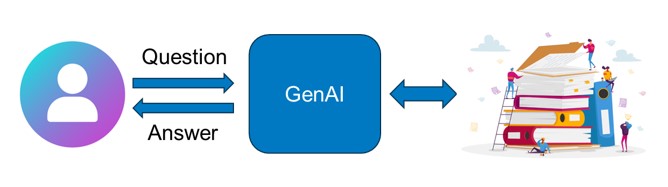 |
| Knowledge synthesis | Automatic generation of business reports, sales proposals, marketing materials, project proposals | 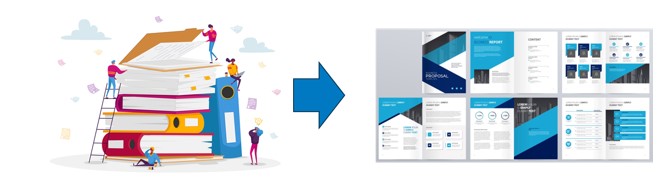 |
The following generic use cases are defined as the top priority at the moment:
| Knowledge process | Generic use cases |
|---|---|
| Knowledge capture | A. Incident reporting in industry (e.g., for equipment, buildings) B. Creating construction site diaries C. Creation of transcripts and closed captions in various languages for instructional videos and podcasts D. … |
| Knowledge access | A. Customer assistant for complex products and services B. Semantic audio and video search for medical instructions C. Learning assistant |
| Knowledge synthesis | A. Sales proposal generation B. Report preparation C. … |
Layer-Based Architecture
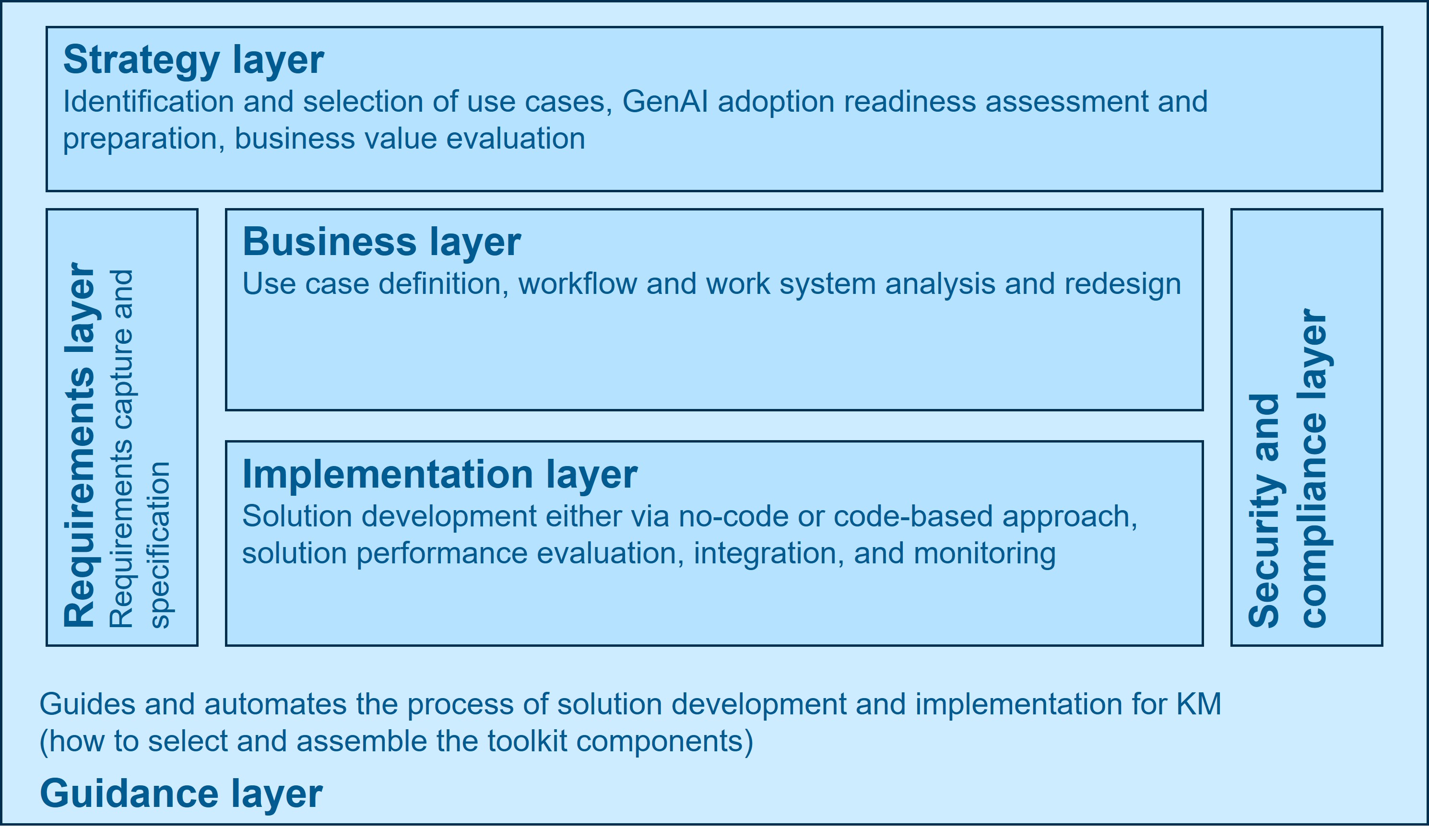
The GAIK Toolkit is organized into a layer-based architecture that spans from strategic planning to implementation and security:
| Layer | Purpose | Contents |
|---|---|---|
| Strategy Layer | Identification and selection of use cases, GenAI adoption readiness assessment and preparation, business value evaluation | Use case selection framework, Value evaluation framework, AI maturity assessment tool, GenAI success canvas |
| Requirements Layer | Requirements capture and specification | Requirement templates, test cases |
| Business Layer | Use case definition, workflow and work system analysis and redesign | GenAI product canvas, Workflow templates, Work systems definitions |
| Implementation Layer | Solution development either via no-code or code-based approach, solution performance evaluation, integration, and monitoring | Reusable software components and modules for system development, (gaik code package), no-code assets, evaluation methods, unit tests, deployment packages, connectors |
| Security Compliance Layer | Security policies and compliance frameworks | Security guidelines, compliance checks, audit trails |
| Guidance Layer | Guides and automates the process of solution development and implementation for KM (how to select and assemble building blocks) | Process and guide for GenAI solution implementation, Configuration wizard, Glossary |
This architecture ensures that GenAI solutions are built with proper governance, clear requirements, and comprehensive implementation support.
GAIK's Roadmap
The GAIK project follows a phased development approach throughout 2026, progressing from initial toolkit development to real-world application:
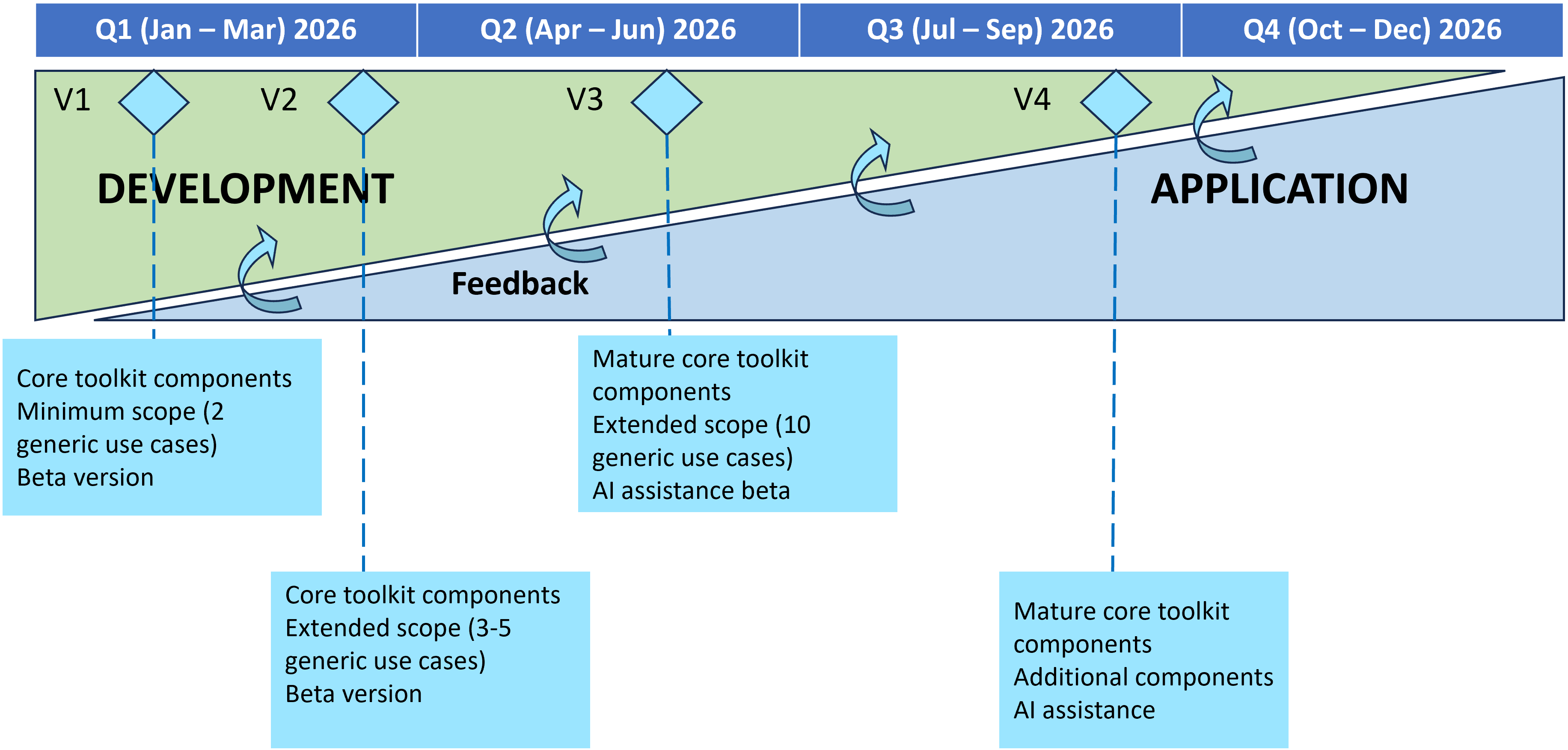
The project evolves through four major versions (V1-V4), transitioning from Development phase (Q1-Q3) to Application phase (Q4). Core toolkit components are established in early versions with a minimum scope of 2 generic use cases, expanding to 10 generic use cases by V3. The final quarter focuses on mature toolkit deployment, additional components, and AI-powered development assistance. Continuous feedback loops throughout the year ensure the toolkit remains aligned with real-world needs.
GAIK Consortium
The GAIK project is implemented by a consortium of four companies and five academic partners with expertise in business digitalization, knowledge management, data science, generative AI, and natural language processing.
Project Partners
Academic Partners:
- Haaga-Helia University of Applied Sciences (coordinator)
- University of Helsinki
- Tampere University of Applied Sciences
Industry Partners:
- Luvata - Manufacturing sector
- Lotus Demolition - Construction sector
- QAdental - Healthcare and well-being sector
- Azets - Business digitalization and consulting
The consortium combines cutting-edge research with real-world business needs from manufacturing, healthcare and well-being, and construction sectors. The toolkit targets identified use cases tailored to contemporary business requirements, as reflected by the needs analysis of the partner companies.
The project continues to extend cooperation with additional companies and international partners.
Accessing the Toolkit (Project Resources)
The GAIK toolkit is accessible through multiple channels to serve different user needs:
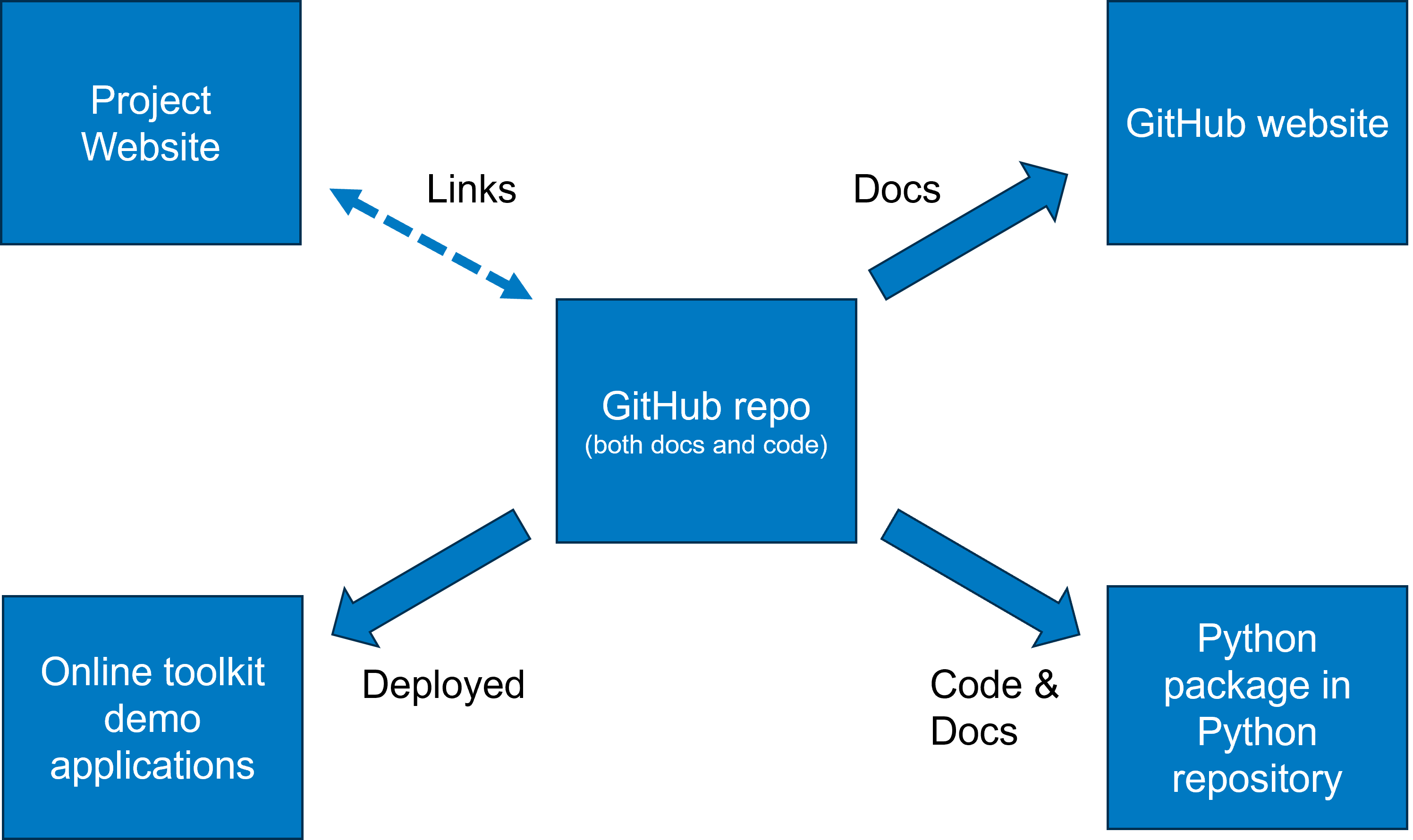
The central GitHub repository serves as the source of truth for both documentation and code. From there, the toolkit is distributed through:
- Project Website - Project's website with announcements, news, and updates (gaik.ai)
- GitHub Website - This documentation site you're viewing now, providing comprehensive guides and references (gaik-project.github.io)
- Online Demo Applications - Live, interactive demonstrations of toolkit capabilities (gaik-demo.2.rahtiapp.fi)
- Python Repository (PyPI) - Installable
gaikpackages available through Python repositories for code-based implementations (pypi.org/project/gaik)
This multi-channel approach ensures that both technical and non-technical users can access the resources most relevant to their needs.
Ready to Get Started?
Whether you're a developer, decision-maker, business analyst, or just exploring, we have tailored pathways to help you get started with the GAIK toolkit based on your role and objectives.
Explore our comprehensive guide: How to Start with the Toolkit →
Contact
Have questions or need assistance with the GAIK toolkit? We're here to help.
Visit our Contact page for detailed contact information based on your needs, or email us at info@gaik.ai
License
This project is licensed under the MIT License – see LICENSE for details.